Posts

Cold Hardy Camellias

Image
Camellias have historically been a warm-climate flowering shrub.   However, many new varieties are cold-hardy to USDA zone 7 and a few are cold-hardy to zone 6. Camellias are in the Tea ( Theaceae) plant family. Camellia sinesis leaves and buds are used to make the green and black teas we drink. Linnaeus named Camellias after a Jesuit missionary, George Kamel. Tea camellias are native to Southeast Asia where they have grown for centuries. U.S. gardeners began making improvements on the Camellia japonicas in the 1700s and by 1960 cold-hardy camellias became available. Two American breeders, Dr. William Ackerman and Dr. Clifford Parks developed the best hybrids. Camellia kanjaro - Greenleaf Nursery Fall-blooming Ackerman hybrids succeed in our region and include: Winter Star, Winter Rose, Winter Snow, Winter Interlude, Pink Icicle, Snow Man, winter’s Charm, Snow Flurry, Ashton’s Snow, etc.   (See http://alturl.com/2x9dn for an Ackerman article on growing camellia...

Medit-Plants - mediterranean climate gardening

Image
If you love the plants that live in a Mediterranean climate (rosemary, lavendar, clematis, etc.) be sure to visit the website designed specifically for them by Sean A. O'Hara. Rosemary in bloom - Tulsa Garden Center O'Hara says on the site, "The world's mediterranean climate regions are distinctly different from other, summer rainfall regions. Because they are desirable places to live, there continues to be a migration to mediterranean climate areas. This has lead to a number of inappropriate and unsustainable horticultural practices - transplanted from elsewhere. These pages are meant to help disseminate a clear understanding of this summer-dry climate and how gardens can be both successful and sustainable."   Called Medit-Plants, the link to the informative site is http://gimcw.org/forum/  and there are many tabs with information on plants for dry shade http://gimcw.org/plants/cult_dryshade.cfm ,  links to related sites at http://gimcw.org/links/ ...

Post your upcoming garden, plant, nature event

Contribute information about your upcoming garden/nature/outdoor event that would be of interest to gardeners and plant lovers. The article will run March 14 and the deadline to submit is March 10. Post it here or email it to mollyday1 at gmail.com My newspaper column runs in northeast Oklahoma but readers of this blog are from all over the place. Only items with complete information can be included minimum information Date and times name of event/sponsor location contact person and phone or email

DIY Herb Drying Rack using picture frames

Image
Go to any reseller like Golden Rule, GoodWill or the junkers' stores and picture frames are a buck apiece. They can be strung (or chained) together to make a stacked herb, flower, vegetable dryer.  Step-by-step instructions at The Crimson Owl for the one on the right. Another method for a wall hanging version for small batches dried indoors from Prac tically Functional .

Books for Gardeners - late winter reading

Image
Spring garden preparation has begun: seed orders are in, pots are cleaned, leaves are raked and the remaining bits of last fall’s garden will go to the compost pile. Early spring vegetable and flower seeds can be sown indoors under lights now to get ready for planting outside in April. Also, it is time to order from the Tulsa Master Gardener’s spring plant sale. Orders are due March 28 for April 18 pick-ups. The pre-order form is at http://tulsamastergardeners.org .   Between now and the first planting day of spring there will be plenty of time for learning new tricks and discovering new plants, so here are five books from a new crop of publications that would be good late-winter reading.   “Starting Seeds: How to Grow Healthy Productive Vegetables, Herbs and Flowers from Seed” by Barbara Ellis, 120 page pocket-size paperback, published by Storey ( www.storey.com ). List price $9; $4 at online vendors. Ellis says “seeds set the rules” and to be successful we j...

Bring Butterflies, Skippers and Moths to Your Garden

Image
Many people love the sight of butterflies, moths and skippers in their garden. Planning ahead can help bring more this summer. Carole Sevilla Brown recently posted a list of five actions to take to improve your butterfly gardening and it's an important place to start. Brown's blog entry is at http://www.beautifulwildlifegarden.com/5-steps-to-butterfly-garden.html Maybe you have some ideas that work for you. We'd love to hear those since we always want more! Start Here Find out what kind of butterflies, moths and skippers are common or native to your neck of the woods so you can plant what they raise their babies (caterpillars or larvae) on. When these insects are born in your garden they tend to stick around and make a few new generations as long as the food lasts.  Butterfly weed - Asclepias tuberosa Mass planting instead of spot planting is a great suggestion from Brown's blog. A single zinnia here and there will bring a single adult butterfl...

Powdery Mildew - organic remedy

Image
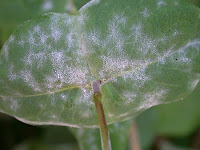
Patricia Rorabaugh, assistant professor of plant sciences at the Controlled Environment Agriculture Center at the University of Arizona uses no chemical treatments on her plants. Purdue Plant & Pest Diagnostic Lab Her remedy for powdery mildew on plants is   "We typically only have problems with two types of fungi: powdery mildew and botrytis. With powdery mildew, which almost always appears on the cucumbers, we use a combination of water (3 gallons), vegetable oil (87 milliliters) and baking soda (9 rounded teaspoons). This is a contact spray and should be sprayed directly onto the powdery mildew spots on a regular basis (once or twice a week). We also get powdery mildew on the peppers which, unlike the cucumber powdery mildew, goes into the underside of the leaf via the stomates and is then untouched by the contact spray. To get to the underside of leaves, a trans- laminar spray must be used that goes into the leaves and kills the powdery mildew from the inside."...