Posts

Showing posts with the label Monarch butterflies and larvae

September is a Busy Month for Gardeners!

Image
September is a busy month for gardeners. Here is a checklist of things to do. Avoid spraying plants where butterfly caterpillars are feeding. Walk around the garden with pruners and insecticidal soap in hand. Check for insects and diseases, taking care of things as you see them. Watch for butterfly caterpillars and avoid spraying insecticide on plants where they are feeding. Collect seeds of butterfly weed, zinnias, vining black-eyed Susan, marigold, morning glory, 4-O’Clocks, peppers, tomatoes, coriander, basil, coreopsis, Rudbeckias, sunflowers, rue, etc. Harvest herbs to dry, freeze and make into products. Pick fall fruit in the evening to avoid insects such as wasps. Identify perennials to divide when the weather cools, including: Daylilies, Asiatic lilies, peony, tall garden phlox, iris, lily of the valley, dahlias, ornamental grass, etc. Take stem cuttings of tender plants that you want to put out again next year. This list includes coleus, lave...
Monarch Butterflies and Milkweed

Image
Monarch butterfly caterpillar By now everyone who reads about gardens, gardening, nature and the environment is planting milkweed and that's a good thing. Aphids on milkweed Milkweed brings lots of new friends to our gardens. Here are the ones on our milkweed. First, there is no milkweed without aphids. I leave them on the plants for their predators to eat and parasitize. Wasps and Lady Beetles and their larvae are ones we most commonly think of as their predators. Pirate bugs and Syrphid Fly larvae also eat aphids Ladybug on milkweed Then there's the Milkweed Tussock Moth caterpillar, Euchaetes egle, that eats milkweed leaves. Cute as they are, they are eating Monarch caterpillars' food and I wish they wouldn't. Tussock Moth Caterpillar This year we have swamp milkweed, tropical milkweed and balloon milkweed in the garden for Monarch caterpillars. The balloon milkweed is the number one favorite with swamp milkweed coming in second. The tr...

Monarch Butterflies and their Look-Alikes

Image
For those of us who are confused by butterfly identification, this is a great link with a quiz to reinforce learning. The National Wildlife Federation published these helpful photos and descriptions. Click here to see the entire entry. And, if you have time, click through to the other educational links they provide within the text. When out in the garden we see all of these but by the time we look up from our task the butterflies have sensed our presence and moved on to the next set of pollen providing flowers! The butterflies that spent the winter under leaf cover are showing themselves on these warm March days but the migrating varieties have yet to show themselves.

Balloon Milkweed was Asclepias physocarpus now Gomphocarpus physocarpus

Image
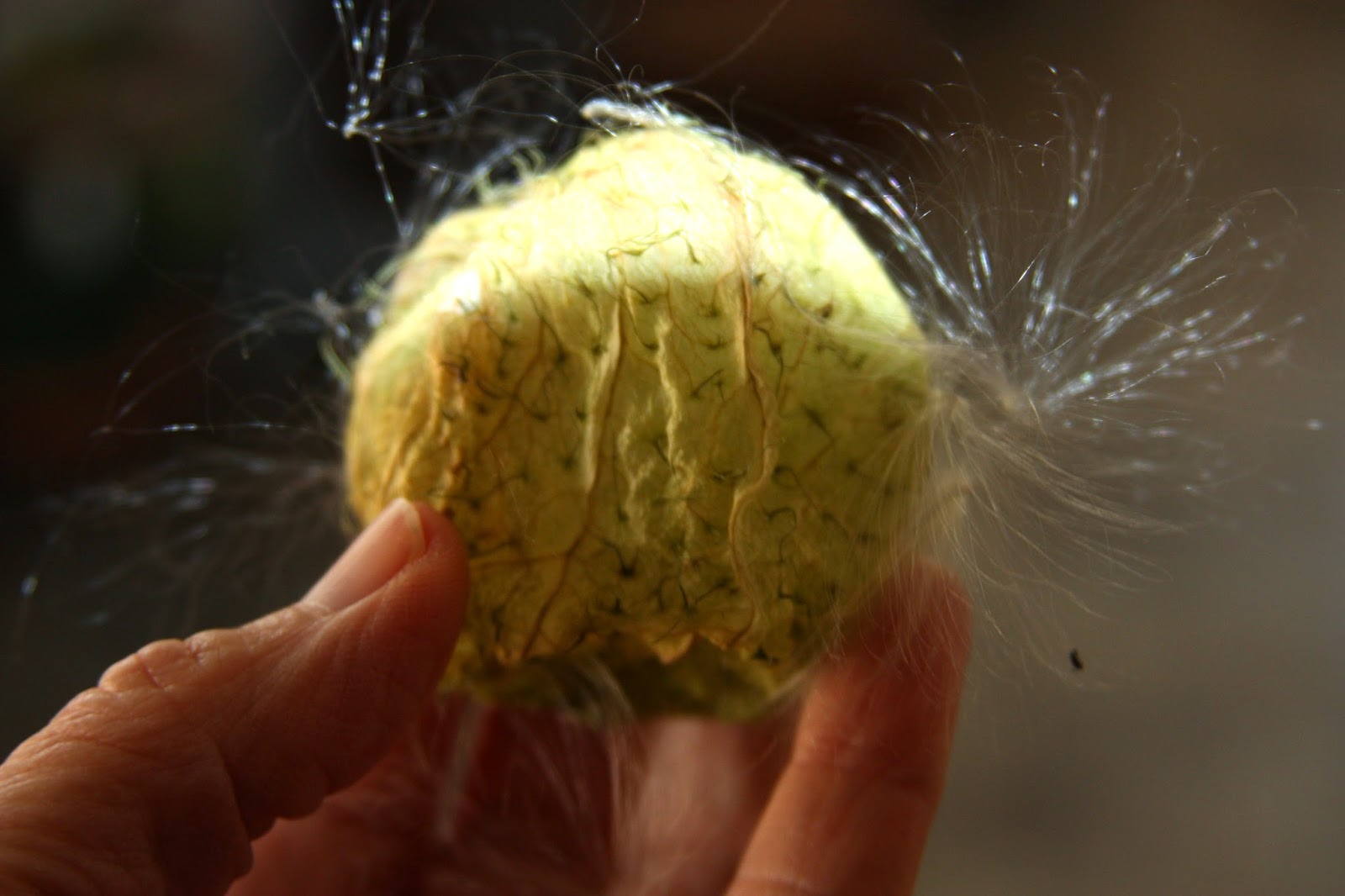
Monarch butterflies are endangered due to applications of round up and similar products, the clearing of land in Oklahoma and extensive tree removal in Mexico. Family Jewels pod We are all being asked to help by planting milkweed. Any variety will do as long as it is planted in swaths large enough to feed caterpillars. The plants don't have to bloom as long as you have water/mud and other nectar providing flowers available for the adults to eat and drink. Balloon Milkweed inside the pod In our yard-garden I've seen the adults nectaring on many different flowers but they do seem to love the weedy, native flowering plants more than the tidy ones. Of all this plant's names, I think I like Family Jewels the best since in addition to the appearance of the pods (ahem), I imagine that the plants will be jewels in our garden, feeding lots and lots of caterpillars this summer. Swan plant seeds We usually plant tropical milkweed, Asclepias Tuberosa, as it's t...

Monarch Butterfly Caterpillars on Asclepias Tuberosa

Image
Growing milkweeds is a wonderful thing and although we grow a few varieties, the Monarch's ( Danaus  plexippus)  favorite seems to be the tropical sort (Asclepias tuberosa) with the bright orange flowers. None of the milkweed varieties are perennial here in zone 7 so it has to be started by seed. The plants are challenging to locate and if you can find it, the cost is ridiculous, well, unless you want to have Monarch families. The one year I purchased tropical milkweed, I dug it up in the fall and replanted it the following spring. That's always an option if you want to protect your investment. I start seeds each winter after a period of cold stratification in the refrigerator or by winter sowing in containers outside. Monarchs are one of the few butterflies that migrate twice a year. We usually get a few in the spring but a lot in the fall. During the drought years they avoid us, seeking better egg laying ground but this year's rain should put them back in our garden...

End of September Monarchs

Image
Monarch Watch in Kansas tracks the migration of Monarch butterflies as they relocate to Mexico for the winter months. Tulsa World ran a column on Sunday about the fall butterfly watch and the Associated Press also ran a fall story about them. Here are the links - Associated Press story and Tulsa World story about the local butterfly count. Our milkweed plants are still loaded with caterpillars, rapidly growing long and fat. According to the chart at Monarch Watch, Muskogee OK is at its peak migration activity from September 24 to October 6. And, that is what my eyes tell me, too. To find your peak Monarch migration period. 1- Go to Google or Dogpile and enter in quotes your town followed by the word latitude. For example "muskogee oklahoma latitude" and you will find a site such as www.travelmath.com that will give you the right numbers. Muskogee is 35 degrees north. 2 - Then, go to http://www.monarchwatch.org/tagmig/peak.html and look for your latitude on the chart t...