Posts

Showing posts with the label host plants for butterfly caterpillars

Giant Swallowtail Butterflies - how to attract and grow them

Image
Giant Swallowtail butterfly Giant Swallowtail butterflies are amazingly large and beautiful but have sort of ugly children. They are intentionally ugly of course, disguising themselves as bird droppings in order to keep from being eaten by said birds. If you plant it they will come. In order to have these gorgeous animals in your flower beds you have to provide either citrus trees or Rue plants. Rue shrub planted for Giant Swallowtails to raise their babies. Rue is cold hardy here and in our gardens the shrubs live 3 to 5 years before they die to be replaced by the seedlings that surround the mature plants. At Johnny's Seeds , 200 seed pack is under $4 and if you plant a bunch of them you'll have plenty of shrubs that survive winter to feed next summer's migration of Giant Swallowtail Butterflies. Giant Swallowtail butterfly caterpillar Dianne's Seeds offers 100 seeds for $2.25 In previous years, I've noticed Black Swallowtail caterpi...
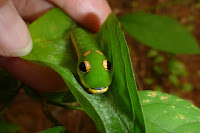
Spicebush Swallowtail Caterpillars

Image
These little Spicebush Swallowtail Caterpillars are only able to eat and live on Spicebush shrubs so when Marilyn Stewart told us about them we bought a couple of the shrubs. During the drought years, most butterflies went past our region of the country, heading for more hospitable places. But this year we are having a baby boom all over our little piece of earth.  When looking for the first little caterpillars you'll see leaves chewed and folded over like the one on the left. When the egg first hatches the caterpillar (larva) eats the contents of the egg for nutrients, then begins to chew the leaves. Their bodies emit a sticky substance that helps them in their work.  So here's a tiny caterpillar on the right with my soiled garden hand for size comparison. The leaf was folded over and I opened it so you could see the little guy inside.  Butterfly poo is called frass. I suppose just to avoid calling it poo. Notice the size of the butterfly caterpillar a...

Butterfly Nursery Plants

Image
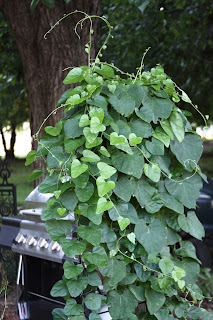
Not everyone can stomach watching caterpillars eat their garden plants. For many of us it is one of the thrills of summertime garden walks. Nectar plants provide food for adult butterflies and we have plenty of those. Host plants are where the butterflies raise their babies. The eggs must hatch on plants that the caterpillars can eat and adults only lay eggs on those plants. Here are some of the plants we grow just so they can be eaten by caterpillars - can you identify the butterflies that use them for host plants? Dutchman's Pipevine Passionflower vines Spicebush Rue Milkweed Balloon milkweed Swamp milkweed Dill Fennel

Pawpaw, Asimina triloba, loved by Zebra Swallowtail Butterflies

Image
The flowers of Pawpaw, Asimina triloba, are downward facing so you have to keep an eye out for them or you will miss their sweet beauty in the spring. Ours is blooming now and has been for the past 2 weeks.   In order to get fruit, you have to have 2 cultivars. We don't care about fruit since we planted the tree solely for the zebra swallowtail butterfly's visits. For our purpose a seed started tree was just fine. For fruit, look for grafted cultivars.   Some protection from the worst of summer's sun and excellent drainage are critical to their success. Since it is a small tree, ours is in the herb bed with a bird bath and a few native plants.           KY State University Pawpaw Planting Guide is at this link   Excerpts- "The pawpaw is a tree of temperate humid growing zones, requiring warm to hot summers, mild to cold winters, and a minimum of 32 inches (81 cm) of rainfall spread rather evenly throughout the year...