Posts

Showing posts with the label Benjamin Vogt

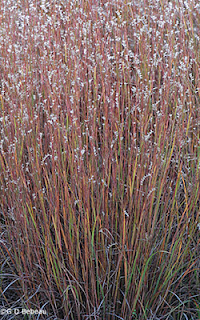
Little Bluestem is Schizachyrium scoparium
Image
Little Bluestem grass is one native plant that still looks good in the August garden.  Hardy in zone 2 to 9. Prefers full sun but will tolerate afternoon shade.  Little Bluestem - fall Stems are copper colors in the fall. Skippers raise their young on the plants and birds eat the seeds in the winter.  Prune in the spring Benjamin Vogt says about Little Bluestem, " Grasses flower too, and mixing grasses with perennial flowers provides good habitat for wildlife and creates healthier gardens that require less maintenance. Little bluestem starts sporting its glittery seeds in August, which can last through most of the winter. It’s drought-tolerant and reaches 3 to 4 feet tall and 2 feet wide." Heather Holm points out, " It thrives in poor soil and provides food and shelter for wildlife." ... " This charming grass does not lack admirable attributes; beyond the fantastic foliage color and compact, upright form, it also provides food and shelter for wi...
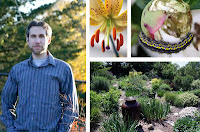
Oklahoma - beautiful natural tour from Vogt's The Deep Middle

Image
Tour Oklahoma through the eyes of Benjamin Vogt, a U. Nebraska English lecturer with a deep respect for nature, a find hand with a sentence, an extraordinary camera eye, and, well everything he touches. Click over to his blog to see the photos and description of our Oklahoma landscape at http://bit.ly/11TolVq . You can't miss his love for our state. from the University of Nebraska at Lincoln For the last five years, Benjamin Vogt has been writing the garden blog "The Deep Middle." The project started as a way for the English lecturer to simply record the evolution of his garden. However, the blog — an infusion of gardening tips and selections from Vogt's published work — has bloomed into a medium that allows the writer and naturalist to connect with gardeners and writers around the world. The blog, http://deepmiddle.blogspot.com/ , has helped establish friendships with garden aficionados from Vietnam, South Africa, France, England, Greece and Mexico. In additio...

Prairie Dogs - maybe we need to think more about them - for starters, they probably are not weeds

Image
Do you want the state government to come onto your property and kill animals you consider harmless? Benjamin Vogt writes " In The Deep Middle ": The legislature of Nebraska in their infinite wisdom and control of all things, "passing a bill--LB473--that will allow the government to go on to private land and poison prairie dogs, which are being classified as noxious weeds (don't ask, you know how government works). If pdogs on your land spread to adjacent land, then the government has the right to go poison your animals and then bill you later. Not only is private property being disregarded, but more importantly, so is the health of a keystone Great Plains species. Desert  USA Prairie dogs once numbered 3-5 billion across the mixed and short grass prairies. One town in Texas was estimated to be 100 x 250 miles, or 16 million acres and 400 million pdogs. Meriwether Lewis called them barking squirrels."   "Prairie dogs are what biologists call a key...