Posts

Showing posts with the label Xeriscape

Native Plants for Cottage Gardens

Image
Love for cottage gardens has grown as we move away from manicured British garden design and make our own American style gardens. North Carolina is zones 6 and 7 , much like our area so their native plant advice is always good to check. NC has a much more active Extension service for home gardeners and as a result they post many more advice and plant-specific articles of interest. You'll find their 4-step Go Native planning site here , complete with how to think about the process and plant guides. Another resource we can use is the Missouri Botanical Garden's link called Selected Perennials for Oklahoma Gardens. Oklahoma Garden Clubs posted an assortment of native plants for home gardens on their website , too. Their selections are primarily ornamental grasses. The OK panhandle, Oklahoma City, Southeast, south central and northeast OK all have different soil, annual rainfall and temperatures so do some more research for your specific climate when deciding what to plan...

Agastache - Late Summer's Dusty Colors = You Can Grow That!

Image
Scented leaves , gorgeous late-summer flowers and durable plants beloved by butterflies, bees and hummingbirds, make Agasataches a garden favorite. Most Agastaches are cold hardy to zone 6 so they will live at least a few years in our climate. Common names for Agastache include: Hummingbird Mint, Anise Hyssop, Giant Hyssop, Sunset Hyssop, Lavender Mint, and Korean Mint. Agastache aurnatiaca Coronado hyssop from   Plant Select Agastaches, including A. rupestris, A. Foeniculum, and A. Aurantiaca, etc., can take the heat as well as an early frost and keep on going. They are drought tolerant so good drainage is important to their survival. They also love sun, even in our humid, zone 7, summertime climate. Only one or two stems come up on each plant so a typical butterfly flower bed could hold several plants without crowding. The flower heads can be used in cut flower bouquets if they are harvested while they are no more than two-thirds open. The scented leaves...

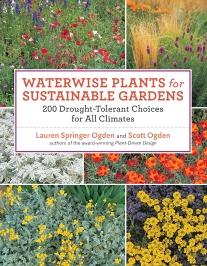
Waterwise Plants for Sustainable Gardens by Lauren & Scott Ogden

Image
With the weather changes we all experienced last growing season, gardeners and plant lovers are wondering which way to go. Wait and see? Or assume this year will be better, back to normal or terrific. I'm holding back somewhat. One of the gardening chores that never goes away is watering. What about planting more and more water-wise plants to have the same amount of beauty with a lower water bill and less work? And, if you're living in an area with water restrictions, water wise gardening will make a big difference. Released in Aug, 2011, "Waterwise Plants for Sustainable Gardens", was recommended to me by Russell Studebaker, long-time garden writer for the Tulsa World. The 200 plants covered in the book include trees, shrubs, perennials, ground covers, grasses and sedges, bulbs and their relatives, vines, annuals, biennials, succulents, cacti, palms and fiber plants. Each plant has its own page with photo, growing preferences, attributes and best zones. In ad...

Reduce Summertime Watering = Xeriscape

Image
Mid-August is the month of watering every plant we want to keep alive for next year or even for the cooler fall days that are coming. August is also a time to consider which pots, flower beds and areas would be ideal to convert to low water plantings. Good candidates for low water usage plants include: beds just past the reach of the garden hose, the hot dry area along a street, driveway, sidewalk curb, around the pool or at the base of a rural mailbox, gigantic ornamental pots, and on the edge of a hill in full sun. Xeriscape (pronounced zeer-eh-skape) does not mean zero landscape. The homeowners who adopt that definition, install a front yard composed of stones, rocks, driftwood, and plastic skulls. Keep Oklahoma Beautiful (keepoklahomabeautiful.com), states that, Plants are selected for a xeriscape based on their ability to grow and thrive with minimal watering and maintenance. Normal levels of watering during the first year establishment period are required since new plantings don’...

Can You Say Xeriscape?

Image
Xeriscape (pronounced zeeriskape)is gardening with a minimum of water use. With water considered to be the the gold of the future, all of us would be wise to consider how we can reduce water use in the landscape. 70% of water used in urban areas is used for non-consumption purposes, including irrigating golf courses, filling swimming pools, residential, park and commercial landscaping. On the homefront, removing all grass is gathering steam as a major movement. Some people take out all the plants and put in rocks. Others prefer a low water-usage selection of plants with mulch. I have a preference. What's yours?

Plants for Water-Wise Gardening

Image
These red tulips are planted in clusters across the front of our yard and have come back three years now. They are a visual treat every time. The spring this year is great compared with last year! Remember that we had already experienced drought and record breaking heat by this time last year. The lack of rain is worrisome, though. In addition to the usual sprinkling of the seed beds, we have started watering the flowering fruit trees to make sure they have enough moisture to produce fruit. If your thoughts are turning to water-wise plants, take a look at the High Country Gardens online catalog for some beautiful xeriscape ideas. Xeriscape sometimes implies that you have a desert garden in Phoenix or Albuquerque, but even water-wise gardens in Oklahoma do well with these types of plants. Waterwise plants include sage, salvia , asters, agastache , achillea , grasses, penstemon . It is important to group these low-water plants together. If they are mixed in the same bed with thirsty ...