Posts

Showing posts with the label native plants for wildlife

Pawpaw Trees Have Three Season Beauty

Image
In the 1500s the large fruits of  Pawpaw trees fed Hernando DeSoto’s conquistadors during their expedition in the Mississippi Valley. A favorite food of American Indians at the time,  early settlers used the fruit to make jelly. The trees’ inner bark was used to make cloth and to string up fish. Pawpaw trees have a wide native range from New York and Ontario to Iowa and Texas.  The trees mature at 10 to 20 feet tall and wide with a round, upright pyramid form that requires no shaping. Pawpaws are cold hardy to zone 5 so they are quite happy in our zone 7 weather.  The pink flowers in the spring are very pretty and prolific. After pollination, yellow fruits form to ripen later in the summer and fall. The fruit is said to taste like bananas though ours is always eaten by wildlife long before we can harvest any. The leaves are large, light green ovals that turn lime green and then pale yellow in the fall, adding to November color in the garden.  ...

Beautyberry Shrub is Callicarpa americana

Image
Like many native shrubs, Beautyberry is shunned by gardeners who want a formal appearance to their property. If you can enjoy the more rustic look that comes with native plants, though, Beautyberry is a star of the fall hedge row in zones 6 - 10.  Beautyberry, Callicarpa Americana, or French Mulberry, enjoys sun to part shade, has minimal water requirements and is disease free. Our row of them is tucked under native peach trees along with holly shrubs for fall migrating birds and fennel for butterflies. Many species of birds enjoy the berries but rabbits and deer rarely eat the stems or leaves. Callicarpa also comes in other varieties with white and lavender berries. Callicarpa Americana takes its time growing to the mature size of 5 or 6 feet tall and wide.  The tiny pink-white flowers attract lots of pollinators in late spring. If you have a Beautyberry that you want to move or divide, do that between Nov and Feb during dormancy. Prune out dead branches and sh...

Black Cherry is Prunus Serotina

Image
Native Black Cherry trees are a really good idea if you can add some wildlife beneficials to your yard. Cold hardy in zones 3 to 9, Black Cherry is an ideal addition to your habitat shrub row. Happy in sun or part-sun, these trees bloom in April and May providing nectar for pollinators and sweet scent for humans. They have a long tap root so they have to be planted young and will resist being transplanted. Eventually, they grow 50 to 80 feet tall so keep them away from overhead wires. The berries are said to be good for jam but the birds and other wildlife eat them all before we even notice that they've ripened. NativNurseries offers them for under $5 apiece. This nursery has been recommended to me by habitat gardeners. Dudley Phelps at NativNurseries said, " We will be growing plenty more this spring, and should have them back up on our website for sale beginning around the month of August. You can order then and request a ship date for when it is a good time of y...

Native Plants Best for Gardens

Image
Going native is so important to our sustainable environment. Every native plant you add to your slice of Planet Earth makes a difference, even if you only have window boxes. You can start from seed or purchase plants. I've listed reliable plant sources below with links By the purest and purist’s definition, native plants grew here before European settlers arrived. In contrast, plants brought into our area from other places and hybrid plants are non-natives. Naturalized plants are those that were brought into the region as non-natives but escaped the cultivated area and thrive as weeds. Wherever they originated, natives are low-maintenance plants that grow well without much assistance after they become established. The benefits to wildlife and to your appreciation of your gardening experience cannot be measured!  Do as much native planting in the fall as you possibly can.  Wild Things Nursery ( www.wildthingsnursery.com ) in Seminole grows and sells OK nativ...

Native Plant Tour and Sale this weekend

This weekend is one of the times native plant vendors will all be available for you to buy plants for your garden. Garden Tour  9 a.m.-5 p.m. Saturday and noon-5 p.m. Sunday 24rd Wildlife Habitat Garden Tour & Plant Sale Cost: $6 per person and children younger than 13 are free; tickets can be purchased at any of the featured gardens Garden locations:546 N. 27th W. Ave., 1424 W. Easton Pl., 639 N. Cheyenne Ave., 1135 N. Denver Ave. and 636 N. Denver Ave. Vendors will be located at each garden as part of the plant sale. Information: tulsaaudubon.org or call 918 521-8894 NATIVE PLANT NURSERIES AND ORGANIZATIONS AT HOME SITES Wild Things Nursery Oklahoma Native Plant Society Monarch Watch Duck Creek Farm WING-IT Utopia Gardens Bird Houses by Mark Pine Ridge Gardens Oxley Nature Center Oklahoma Wildcrafting Missouri Wildflowers Nursery Tulsa Audubon Society Northeast Oklahoma Beekeepers Assoc. http://www.tulsaworld.com/homepagelatest/wildlife...

Gardening for Life

Image
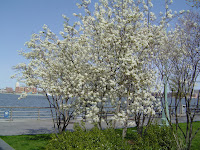
Bringing Nature Home recently posted an excellent reminder for us as we face fall clean up in the garden and plan for next year's garden.  Amelanchier canadensis Click on the link above to read the full article. Here are excerpts to whet your appetite: Chances are, you have never thought of your garden — indeed, of all of the space on your property — as a wildlife preserve that represents the last chance we have for sustaining plants and animals that were once common throughout the U.S. But that is exactly the role our suburban landscapes are now playing and will play even more in the near future. we have forced the plants and animals that evolved in North America (our nation’s biodiversity) to depend more and more on human-dominated landscapes for their continued existence.  Viburnum dentatum those little woodlots and “open spaces” we have not paved over or manicured are pristine. Nearly all are second-growth forests that have been thoroughly invaded by alien...

Northern Bayberry Shrub is Myrica Pensylvanica

Image
Northern Bayberry Shrub is an American native that is cold hardy in zones 3 to 7. The native variety matures at 10 - 12 feet tall and wide. There are cultivated varieties/hybrids that remain smaller.  This is a shrub that provides shelter, feeds wildlife, is tolerant of many soil types, is deer-resistant and will tolerate full-sun to part-shade. Northern Bayberry can be great for a larger landscaped area as it will produce suckers from the root and create its own large colony over time. They will drop their leaves in the fall and the blue-gray-toned berries that persist over the winter add interest to the winter landscape. Ideal for woodland gardens, privacy screen, shrub borders and roadside planting, Sometimes labeled Waxmyrtle, Bayberry shrubs are easy to find in nurseries. The leaves and berries are scented with the scent being familiar to anyone who has been around Bayberry candles. Ohio State University mentions these compact hybrids:  "‘Myda’ a heavy fruitin...

Little Bluestem is Schizachyrium scoparium

Image
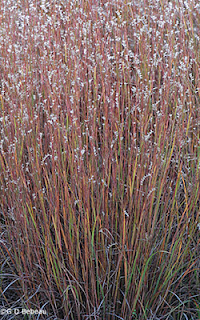
Little Bluestem grass is one native plant that still looks good in the August garden.  Hardy in zone 2 to 9. Prefers full sun but will tolerate afternoon shade.  Little Bluestem - fall Stems are copper colors in the fall. Skippers raise their young on the plants and birds eat the seeds in the winter.  Prune in the spring Benjamin Vogt says about Little Bluestem, " Grasses flower too, and mixing grasses with perennial flowers provides good habitat for wildlife and creates healthier gardens that require less maintenance. Little bluestem starts sporting its glittery seeds in August, which can last through most of the winter. It’s drought-tolerant and reaches 3 to 4 feet tall and 2 feet wide." Heather Holm points out, " It thrives in poor soil and provides food and shelter for wildlife." ... " This charming grass does not lack admirable attributes; beyond the fantastic foliage color and compact, upright form, it also provides food and shelter for wi...

Pollinators and the Native Plants You Should Grow for Them

The Kerr Center for Sustainable Agriculture in Poteau OK, has provided an online library for us to learn about which native plants are best for providing nectar and caterpillar food for our native pollinators. Here's a link that will take you directly to their resources and other helpful information. http://kerrcenter.com/conservation/native-plants-pollinators/native-plant-pollinator-publications/ If that interests you and you want more, go to their main site and look at the hundreds of free resources they offer to the public. http://kerrcenter.com/ We have taken a couple of their workshops and found them to be worthwhile for our gardening needs.

Butterfly Nursery Plants

Image
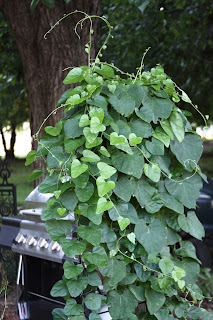
Not everyone can stomach watching caterpillars eat their garden plants. For many of us it is one of the thrills of summertime garden walks. Nectar plants provide food for adult butterflies and we have plenty of those. Host plants are where the butterflies raise their babies. The eggs must hatch on plants that the caterpillars can eat and adults only lay eggs on those plants. Here are some of the plants we grow just so they can be eaten by caterpillars - can you identify the butterflies that use them for host plants? Dutchman's Pipevine Passionflower vines Spicebush Rue Milkweed Balloon milkweed Swamp milkweed Dill Fennel

Wild Black Cherry tree is Prunus serotina

Image
Prunus serotina, wild black cherry tree Wild black cherry trees have been added to our fence line in two places, thanks to wildlife. No more, please. Considered junk trees by many, we allow these two because they provide early pollen for many insects and late little berries for birds. Of course, the birds like those cherries so much that they replant and replant with abandon. This plant is one of the pioneer species, mostly growing where black walnut, hackberry and black locust trees proliferate. The tree was introduced as an ornamental and since the seed germination rates are very high, it soon became naturalized until today it is considered undesirable or invasive, which ever word you prefer. Wild Black Cherry is host to caterpillars who eat its leaves. If the leaves are crushed, they smell like cherries . Eastern OK is at the far-west portion of its habitat , probably because of our normal rainfall being high. West of the OK/AR state line there is nothing on the gra...

Wild Plum - Prunus angustifolia, Purnus Americana, Wild Plum - Spring flowering shrubs and trees

Image
Native plum tree bark As I walk around our yard in the morning with camera in hand, I see many lovely little and mid-size plants that I can no longer exactly identify. Did the birds plant that or did we? I thought these were little native plum trees, Prunus Americana , that we planted along the south fence-line to soften the view of our neighbor's gigantic metal building with a pile of tires so high we can see it from the hammocks in the summer. However, now I'm pretty sure they are our native Sand Plums,  Prunus  angustifolia   instead.  Here's a handy link from the Washington Native Plant Society with photos of dozens of spring flowering trees and shrubs to help you identify what the birds planted in your beds and fence-line! My dream is that in a couple of years the native plums will at least block the tire pile though they will always remain too short to block the building and yet small enough to not grow into the power lines along the property line....

Poke weed - Love It or Kill It? Phytolacca americana

April 16, 9:30 am Russell Studebaker speaking “Poke Weed: Native Spring Greens or Garden Pest?”  Muskogee Garden Club 119 Spaulding DR Information Susan Asquith 918.869.7401 Among the plants we love there are many with the word “weed” in their name including: Jimson Weed, Butterfly Weed, Bishop’s Weed, Joe Pye Weed, Milkweed, Jewel Weed, Rosin Weed and Poke Weed. Some we plant intentionally and others show up as gifts from birds and squirrels. Still others show up after we apply purchased compost.  Jimson Weed (Datura or Loco Weed) is frequently planted by gardeners because of its large, ruffled purple and white flowers. Easily grown from seed, garden centers sell it in one-gallon containers. Datura is called Loco Weed because the poison in the stems can cause hallucinations. Bishop’s Weed (Aegopodium podagraria or Goutweed) is sold in garden centers as a rapidly growing shade perennial that chokes out more undesirable weeds. Besides, in India and Ru...

Gardeners can support the natural food chain

Clark Shilling speaking at Muskogee Garden Club 9:30 am Oct 16 Kiwanis Senior Center 119 Spaulding DR Information Susan Asquith 918-682-3688 Free and open to the public ------------------------------------------------------------- Among gardeners andnature-lovers , there has been a gradual migration from a just-plant-something philosophy to a plant-something-useful philosophy over the past ten years or more. It’s not that raising roses and lilies is frowned upon, it’s more that we are being urged to add a few herbs or vegetables, shrubs that make berries or put in more environmentally friendly native plant varieties. There is a free online course available at www.ecosystemgardening.com . The author Carole Sevilla-Brown defined the Five Pillars of Ecosystem Gardening: Sustainable Gardening, Water Conservation, Plant More Native Plants, Build Soil Health, and Remove Invasive Plants. Making the change is easy to do if it is done in small steps. For exampl...

Attract Wildlife in Your Garden and Yard

Image
Attracting wildlife to a back or front yard requires patience plus a willingness to share, according to Clark Shilling of Owasso. Clark and Connie Shilling gave a presentation at the 2014 Horticulture Industries Conference last month, showing the audience photos of the wildlife-friendly plants they have added to their 1.5-acre yard. “We bought our property 11-years ago,” said Clark. “We went to the Tulsa Audubon Society Tour ( www.tulsaaudubon.org ) to see what was growing in local native plant gardens. While we were there, we bought the book “Bringing Nature Home” and that was our turning point.” Since attending that tour the Shillings have planted more and more natives. He said Connie’s flower beds are in the front yard, a lawn is in the back yard for their grandchildren, and they fenced an acre in the back for wildlife viewing. OK native peach tree He said native fruits and nuts are good choices for feeding wildlife but that pecans, persimmon and black walnuts ...

Bundleflower is Desmanthus illinoensis, Wood Rose, Prickleweed, False Sensitive Plant, etc.

Image
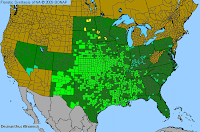
Wildflowers are important to add a light touch to a cottage garden or for building a wildscape area that can help birds thrive. Native trees, flowers and grasses are more adaptive; harsh winter or summer weather cannot keep them down. They provide nectar for insects, attracting pollinators to our vegetable gardens and home grown fruit. Most wildflowers take lots of sun but are not very particular about soil quality. Planting native grasses in your garden or shrub row will attract songbirds as well as quail, doves, cardinals, sparrows, and other seed-eaters. Native grasses to consider include: Bluegrass, Bluestem, Bristlegrass, Buffalograss, Bundleflower, Dropseed, Gamagrass, Grama, Lovegrass, and Wintergrass. Desmanthus native range - PollenLibrary.com Illinois Bundleflower or Desmanthus illinoensis is native in USDA zones 5 through 8, most of the central and southern U.S. mainland states. Its range skips the east and west coasts as well as Montana and Nevada. Erow...