Posts

Showing posts with the label Plants that attract honey bees and butterflies

Lemon Bergamot is Monarda citriodora and Lemon Bee Balm

Image
Lemon Bergamot was featured on a native plant site as being terrific for pollinators, including bees and butterflies. The seed supplier that was featuring the herb did not have their online store up and ready. Not only is Lemon Bee Balm gorgeous in flower it has many benefits to man and beast. For humans, the usual recommendation is drinking tea made of the leaves, though some people eat the leaves, too. All bees benefit from a planting but bumble bees in particular prefer its flowers. To grow: Plant the seeds indoors now and transplant outside when all danger of frost has passed. When they reach half-height, about 1-foot tall, be sure they have enough moisture to continue growing to full size which is 2 plus feet tall. This Monarda is an American native so its water needs are low. It can take part shade and dry soil, sand, rock, clay - whatever you have except wet or boggy soil. Although it is an annual, it can form clumps or become aggressive in good soil. Like all Monarda, it ...
Raise Bees Eat Honey!

Image
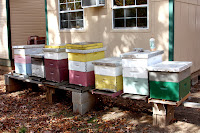
Beekeeping is a popular hobby and, if you enjoy using honey on your toast and in your tea, you might want to have a few hives in the back yard.  In 2012 U.S. Apiculture, or beekeeping, produced 147 million pounds of honey but that was less than in previous years and more beekeepers are needed. Honey has been a dietary staple for a long time. In Spain, cave drawings dating to 6,000 B.C. show people climbing cliffs to reach honey hives.     Local beekeepers Ruth and Lonnie O’Dell started their beekeeping hobby in 1971 and this year their 10 hives produced around 120-pounds per hive. “I was teaching carpentry at Indian Capital Technology Center when I brought a swarm of bees home in a box,” said Lonnie. “Anyone with a garden should have a hive to pollinate their vegetables and fruit.” The sweet rewards of beekeeping require an investment of time and money but there are several reasons the O’Dells have enjoyed it for so many years. Ruth said, “Everyone who get...

Wingstem is Verbesina alternifolia flowering native for the landscape

Image
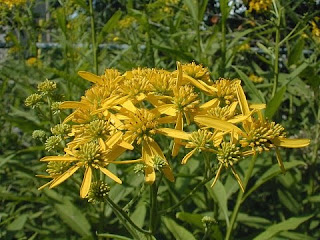
Sometimes called Yellow Iron Weed, Wingstem is an American native perennial plant for butterflies and wildlife. They grow 5 feet tall with a central, winged stem. Crownbeard is another common name. Wingstem - Illinois Wildflowers page I'd show you a photo of ours but I just put two of them in the ground today and they aren't much to look at yet. They were purchased from MaryAnn King at Pine Ridge Gardens Nursery in Arkansas. According to one provider, Nodding Onion Gardens in Ohio, each plant will grow 6 to 8 feet tall in zones 5 through 9. They want full sun to part shade so they were a perfect addition to the end of one of the perennial beds that needed a few more substantial plants in it. Ill Wildflowers also says "The flowers are visited primarily by long-tongued bees, especially bumblebees. Some short-tongued bees, butterflies, and skippers also visit the flowers; the long tubes of the disk florets make the nectar inaccessible to many insects with ...

Honey Bees are Buzzing

Image
There are several places on our little slice of the earth where you can hear honey bees buzzing. In one of the front driveway beds, they cover the lavender blossoms of Walker's Low Catnip (Nepeta). In the vegetable garden they buzz loudly all over the blooming late spring chard and kale flowers. The back flower bed is buzzing loudly, too. There are trees in the front yard crawling with honey bees: The huge catalpa and another tree I have yet to identify. The mystery tree has tiny bell shaped flowers at this time of year. Along the side of the driveway the Sweetspire is also abuzz this week. On the other side, the pink-flowering Black Lace Elderberry is covered with honey bees. This lavender-blue flowering perennial is one I bought 4 years ago at a local nursery. The lable said Heliotrope but it looks a lot like a Verbena. Either way, it is a very agreeable ground cover for the front sidewalk bed. It spreads to cover any bit of bare ground, preventing weeds from coming up. And, i...