Posts

Showing posts with the label Crownbeard

Wingstem or Ironweed is Verbesina

Image
Wingstem or Ironweed is classified as a weed by the Virginia Tech Weed Identification Guide but we planted it intentionally as a butterfly nectar food for our yard since its flowers are abundant in the fall when there is little else for our flying friends. Ironweed or Wingstem is Verbesina alternaefolia One if its other common names is Ironweed and there are several other plants with that common name, including Veronia novemboracensis which has blue-purple flowers in the fall. Pine Ridge Gardens in NW Arkansas was the source for our original plant. It has taken several years for it to become 12 feet tall and begin to sucker out into the dry bed where it lives. Since the blossoms are small we find a lot of skippers nectaring on the flowers. Oklahoma's Bina Flower Moth and Aluring Schinia Moth use these plants to raise their caterpillars. Wingstem, a member of the Aster family, is definitely an American native plant and can be found flourishing in open fields. O...
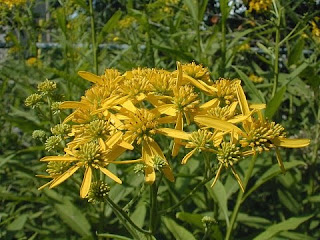
Wingstem is Verbesina alternifolia flowering native for the landscape

Image
Sometimes called Yellow Iron Weed, Wingstem is an American native perennial plant for butterflies and wildlife. They grow 5 feet tall with a central, winged stem. Crownbeard is another common name. Wingstem - Illinois Wildflowers page I'd show you a photo of ours but I just put two of them in the ground today and they aren't much to look at yet. They were purchased from MaryAnn King at Pine Ridge Gardens Nursery in Arkansas. According to one provider, Nodding Onion Gardens in Ohio, each plant will grow 6 to 8 feet tall in zones 5 through 9. They want full sun to part shade so they were a perfect addition to the end of one of the perennial beds that needed a few more substantial plants in it. Ill Wildflowers also says "The flowers are visited primarily by long-tongued bees, especially bumblebees. Some short-tongued bees, butterflies, and skippers also visit the flowers; the long tubes of the disk florets make the nectar inaccessible to many insects with ...