Posts

Showing posts with the label easy to grow plants

Hydrangea Shrubs Flower all Summer

Image
Hydrangea shrubs began blooming a month ago and, depending on the variety, will be in bloom through the fall. It is possible to have a collection of Hydrangeas and have some in bloom from May to September.  n addition to flowers, some Hydrangeas are known for the beauty of their bark when the leaves fall in the winter. Hydrangeas are popular for planting around the foundation of a home since they thrive with a little protection from out hot summer sun.  Traditionally, they are located on the north side of a structure but can also be planted as a shrub row or as a specimen plant. The flower colors are dependent on the color they were bred to show plus the amount of aluminum ions in the soil. Acidic soils with a pH greater than 6.0 cause pink flowers. White flowering shrubs are not impacted by the type of soil. Generally speaking, Hydrangeas are carefree. They benefit from being watered during periods of drought but rarely have disease or insect problems....

Heleniums - old and new, tall and short, yellows and reds

Image
The leaves of native Sneezeweed (Helenium autumnale) were added to snuff to make people sneeze in order to expel evil spirits and prevent hay fever.   (Bless you!) Another common name is Swamp Sunflower because they multiply and take over moist meadows and damp woodlands. Linnaeus named them Helen’s Flower in a fanciful association with Helen of Troy’s tears that no one understands. Bittersweet and Bitterweed are other common names for the same plant. Overall, there are 40 Helenium species that are cold hardy in zones 3 to 8. Some are annuals and others are perennial herbs. All of them form clumps in damp but not wet soil. The species sizes range from 2 feet to 5 feet tall. Tall varieties may have to be staked at the end of the season unless they are pruned mid-summer. Like their close relatives, asters and sunflowers, Helenium’s flowers are daisy-like rays of petals.   Heleniums bloom from late summer until frost with flower colors of yellow, orange, brown and reds...

Moonflowers and Morning Glories

Image
Moonflower vines are to the evening as Morning Glories are to the early hours after sunrise. We love the charm of watching these cottage garden favorites open before our eyes.   The buds are gently twisted at first, opening to show funnel shaped flowers with plenty of pollen for moths at night from Moonflowers and, for bees during the day from Morning Glories. Whether they are climbing over an archway, a trellis, through shrubs or over a country mailbox, Moonflowers and Morning Glories never fail to make us smile about their exuberance. All 500 trees, shrubs and vine in the plant genus, Ipomoea prefer warm climates. In fact all the plants in their family, Convolvulaceae have funnel shaped flowers and triangle shaped leaves.   Moonflowers, Ipomoea alba,   need   sun, water and a little fertilizer to bloom their best. The flowers unfold in 2-3 minutes and you can watch them go from bud to 6-inch flower.   Some catalogs list Moonflowers as Calonyction...

Rose Campion and her Lychnis genus

Image
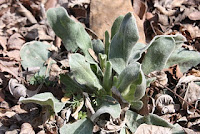
In our area, Rose Campion (also called Blood Red, Abbotswood Rose) can become too enthusiastic about spreading her offspring. In a couple of years, a cluster of 6 plants will have little seedlings spread over a 5 foot by 3 foot area of the ground surrounding the bed. The generic Campion name comes from the Greek word lychnos or lamp, describing the bright flowers atop the soft colored leaves and stems. According to "Armitage's Manual of Annulas, Biennials, and Half-Hardy Perennials", they used to be called Champions referring to their use in garlands given to victors in public contests. There are many Lychnis species and a few Lychnis have been moved into the Silene family so you may see references calling some of them one or the other. One of the other common ones is Lychnis chalcedonica or Maltese Cross. Wikipedia says it is from Europe, China and Russia. The one we grow so easily is a European variety, Lychnis coronaria or Rose Campion  Rose campion in Febr...