Posts

Showing posts with the label native shrubs zone 7

Red Buckeye is Aesculus pavia

Image
Our  Red Buckeye - Aesculus pavia is budding and leafing out today. Gorgeous in its third or fourth year.  It's a part-shade understory shrub or bush that is native in our area. Can you see it to the left of the daffodils? Introduction : Red buckeye, a native of the southeastern United States that produces brilliant red flowers, is the best buckeye for this region. It can be grown in all soil textures and is nearly pest-free. Its flowers, which last several weeks in spring, attract hummingbirds and butterflies.   Culture : Red buckeye can be grown in shade or full sun, although its growth is shrubby and open in shade. It does well in all soil textures, and prefers a moist, well-drained soil that is slightly alkaline to acidic. It grows best in good, rich soil. It is moderately drought-tolerant and, if grown in full sun, should be mulched and watered to keep the roots cool and moist. Red buckeye, which is hardy in Zones 4 to 8, is almost pest-free, although it ca...

Downy Serviceberry native shrub is Amelanchier arborea

Image
Downy Serviceberry The Arkansas Native Plant Society sends a monthly email to subscribers who are interested in native plants. Downy Serviceberry was the topic of the Feb 28 2018 newsletter . At the link, look right and you'll see the sign-up box. I read 80% of them since I'm always on the lookout for an education on native plants for our area and ONPS doesn't have anything like this.  With branching and suckers they reach 15 by 15 feet in part-shade. Fall color and scented flowers. Bird habitat. " Downy serviceberry, a deciduous tree to large shrub (referred to as “tree” herein), tends to have several trunks of varying size and, when younger, may sprout nearby suckers.  Mature trees in full sun have a thickly branched, rounded crown, while those in shadier understories tend to be tall with irregular branching. An average size large tree is 15 to 25 feet tall (state champion tree is 44 feet tall).  Branches tend to diverge from the parent branch at a shar...

Native Beautyberry Shrubs are Callicarpa americana

Image
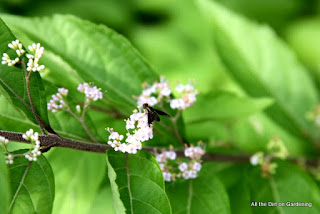
American Beautyberry shrub is a native, American shrub in the Verbena plant family. Their native range is primarily in USDA growing zones 7 to 9. Since they do best in such a narrow range, they have not become a widely promoted or planted shrub. Beautyberries are naturalized in moist woodlands from southern Maryland to NC and from OK to Mexico.  When they are planted in colder areas, such as St. Louis, they die to the ground in the winter. American Beautyberry flowers in June There are over a thousand other plants in the Verbenaceae family including all the verbenas, vervains, and lantanas. American Beautyberry takes its time growing into the mature size of 3 to 6 feet tall and wide, or more.  The summertime flowers are small, pink-white, clusters that pollinators are drawn to. After the flowers fade the loose-stemmed shrub has arching stems of mid-green leaves that provide a backdrop for summer flowers.  In the fall, all of those clusters of pollinat...

Hydrangea quercifolia 'Sikes Dwarf' Native Hydrangea

Image
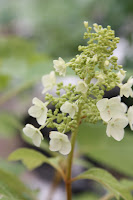
The Morton Arboretum recommends native Sikes Dwarf Hydrangea for smaller gardens. I would add also for cozy corners or shady nooks of a large garden. The Sikes Dwarf grows about 2 feet tall and wide at maturity and will survive zone 5 winters. In addition to the other reasons we love native plants, this baby is disease and insect free. They will thrive in moist, slightly acidic, well-drained soil. As with all these shade lovers, mulch really helps them survive our summers. You may have to protect it a bit since it flowers on old wood and the flower buds can be damaged in extreme cold. Prune after bloom like most hydrangeas. PineRidge Gardens As you can see, the flowers are more open than many. Digging Dog Nursery says, "We have Sarah Sikes to thank for this new low growing Oak Leaf Hydrangea. Hailing from Alabama, it’s half the size of most quercifolias, rendering it a mainstay in the smaller garden. Lobed and closely spaced, the handsome broad foliage shows o...