Posts

Monarch Celebration in Tulsa

Tulsa’s RiverParks Authority is putting on a free Monarchs on the Mountain festival celebrating the vital role Eastern Oklahoma plays in the Monarch Butterfly migration. September 24th , on Turkey Mountain from  10:00 am , until  2:00 pm at the pavilion area of Turkey Mountain Urban Wilderness Area near the main trailhead, 6850 S. Elwood Ave. The day will be filled with fun and educational activities highlighting the life cycle of the Monarch Butterfly, the Great Monarch Migration and the habitat of Turkey Mountain which supports a myriad of wildlife.  This event is hosted by: RiverParks Authority in partnership with the Tulsa Urban Wilderness Coalition, the Tulsa Audubon Society and The M.E.T. and supporters; Sustainable Tulsa, Blue Thumb, The Tulsa Zoo, City of Tulsa, Monarch Initiative of Tulsa, Westside Y and the USFWS. For more information contact Marci Hawkins, steering committee chair at:   marci.hawkins@ tulsaurbanwildernesscoalition. org . ...

Native Plant Society Events

The Oklahoma Native Plant Society upcoming events - August 27  - SW Chapter joint meeting  with OK Archeological Society Bob Blasing will give a talk. The title is:  "How Early Great Plains Tribes Used Seasonal Travel to Obtain Resources ". The meeting is booked at the Museum of the Great Plains for  Saturday August 27th , at  2:00 P.M.  Refreshments will be provided. September 1st  - Central Chapter meeting at the OSU-OKC horticulture building at  7pm . Marilyn Stewart will give a talk on  Weird and Wonderful Natives of Oklahoma.  The owner of Wildthings Nursery, her full time + job and interest is in Oklahoma native plants. She is an expert in the field; her talk should be both informative and fun. Bring a friend and come join us. September 11th  - There will be a native grass outing/ field trip at the Martin Nature Park, 5000 W. Memorial, OKC on  Sunday, September 11th at 2:30 . Bill Bennett, a volunteer at Martin Park,...

Rose of Sharon is Hibiscus syriacus

Image
The native, cold-hardy Hibiscus shrubs are blooming now and are one of the highlights of late-summer gardens. The large, colorful, cup-shaped flowers shine in pinks, purples and white against the rest of the garden. Full-sun is usually recommended though ours bloom reasonably well with a bit of afternoon shade. The ones in full-sun produce more flowers. Cultivated Hibiscus shrubs bloom earlier in the summer and are worth pursuing for their varied flower colors and forms. They also produce very few seedlings when compared to the native plants.  Shrubs in the Chiffon series of Hibiscus have a ruffled center set of petals. The Blue Chiffon in our garden makes me stop and stare every time it blooms. Others in the series include: Lavender, Pink, and White Chiffon. Satin Hibiscus cultivars have flowers with dark red centers.  They come in Blue, Orchid, Violet and Ruffled varieties. Another Hibiscus we love in our perennial bed is Sugar Tip which is a completely seedles...

Garden Tips for OK

Oklahoma State University's website has gardening tips month-by-month. Here's the link so you can click over to see them. August tips include starting a fall vegetable garden, spraying fruit and nut trees, divide and replant spring-blooming perennial flowers, stop deadheading roses, etc. Enjoy and check back to the site each month!

Pollinator Plants for Late-Summer

Image
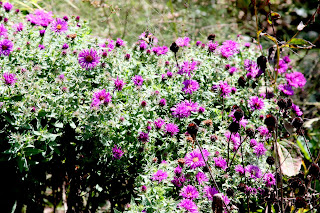
It's August and our gardens are struggling to keep up with the heat. There are still several plants that we can add to the garden to benefit pollinators in late-summer and fall. Flowering now for pollinators: milkweed, purple prairie clover, rattlesnake master, zinnias, coneflowers, sedum, goldenrod, Joe-Pye weed, compass plant, mints and others. Asters will be blooming soon, bringing dozens of pollinators at a time! The Kerr Center's chart of wildflower blooming times helps identify plants we can add to the beds and hedge rows to keep food available for pollinators. Here's a link to the chart. They include Maximillion sunflower in their list but it's a less likely garden plant than one for an open field or hedge row. Keep your plants thriving by watering them in the early morning hours. Don't fertilize at this time of year since most plants are slowing down for dormancy and fertilizing pushes them to grow.

Using Prairie to Restore Farm Land

The attitudes toward prairie plants has been changing gradually over the past decade. When settlers arrived in the midwest a century ago, they removed wild plants and grasses in order to put in crops, thereby eliminating prairie. Now there is recognition that it is a mistake to shun prairie plants and many farmers are putting patches of prairie back into their farming plans. Research at Iowa State University points to the prairie plants' deep-roots that soak up polluting waste water, filter it and enrich the soil. In an interview with the Washington Post , prairie guru,    Lisa Schulte Moore, said, " “The reason why we have the best soil, making it possible to have the world’s best food production, is prairie." The article says, " Now Schulte Moore and a team of 50 researchers are pushing for a resurrection and spreading a message: Wild prairie could help the state’s agriculture industry. It could slow soil erosion that costs farmers more than a billion dol...

Little Bluestem is Schizachyrium scoparium

Image
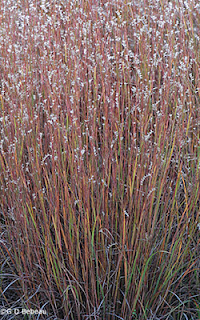
Little Bluestem grass is one native plant that still looks good in the August garden.  Hardy in zone 2 to 9. Prefers full sun but will tolerate afternoon shade.  Little Bluestem - fall Stems are copper colors in the fall. Skippers raise their young on the plants and birds eat the seeds in the winter.  Prune in the spring Benjamin Vogt says about Little Bluestem, " Grasses flower too, and mixing grasses with perennial flowers provides good habitat for wildlife and creates healthier gardens that require less maintenance. Little bluestem starts sporting its glittery seeds in August, which can last through most of the winter. It’s drought-tolerant and reaches 3 to 4 feet tall and 2 feet wide." Heather Holm points out, " It thrives in poor soil and provides food and shelter for wildlife." ... " This charming grass does not lack admirable attributes; beyond the fantastic foliage color and compact, upright form, it also provides food and shelter for wi...