Posts

How We Do It - Seedlings - growing and hardening off before planting
Image
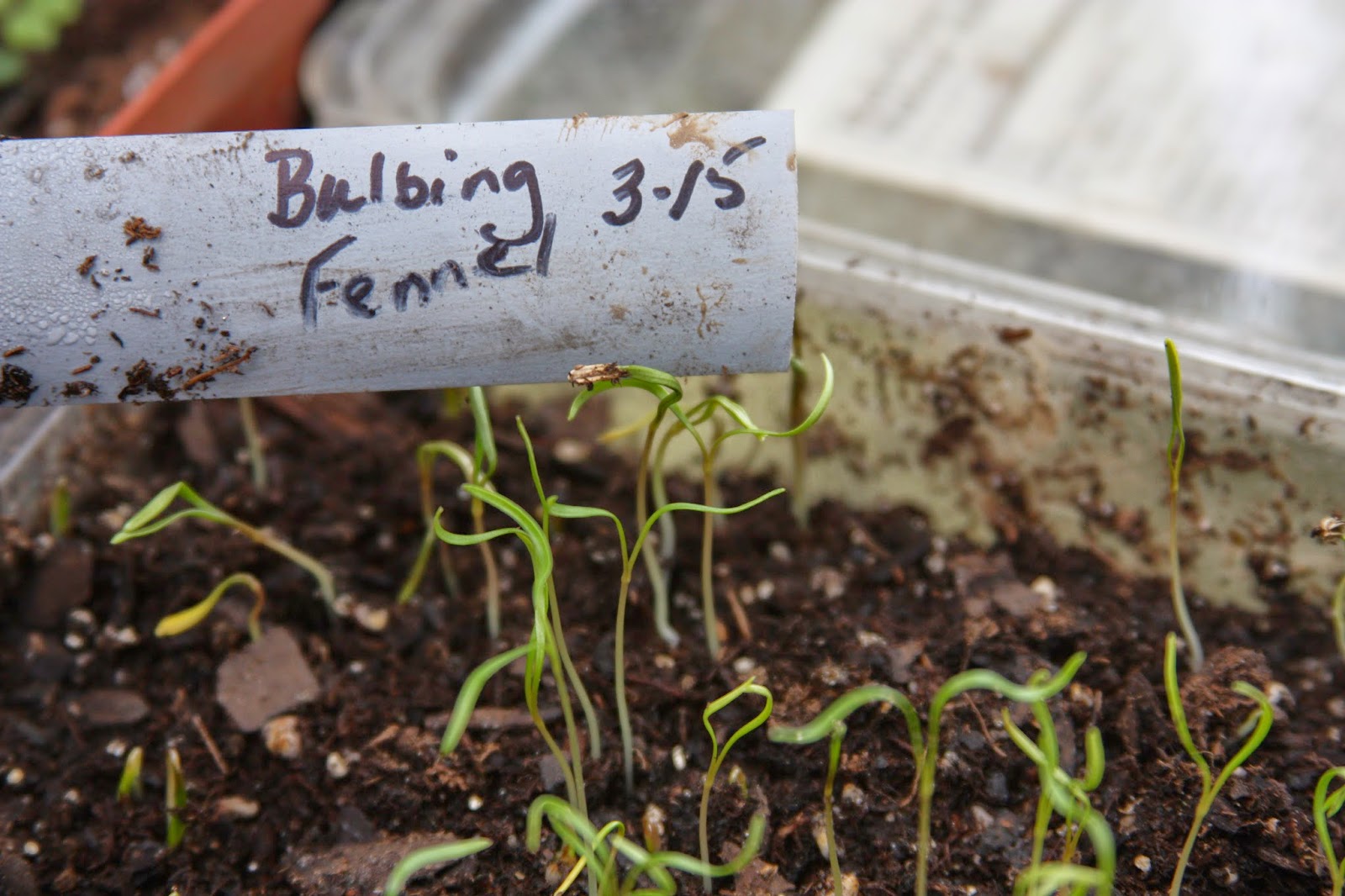
We cut pieces of mini-blinds and mark seed type and date planted. Here is  a pictorial essay about how we grow from seed. Most of the time seeds are planted in the clear plastic shells that contain berries. They let light in plus have drainage and air holes Some containers are put outside in plant trays inside the fenced area of the little vegetable garden to reduce squirrel damage. Others are grown inside the garden shed which has lights and very low heat. Seeds put outside are ones that need cold stratification (alternating freeze and thaw) in order to soak off or break through the outer seed coat. The columbine seedlings were too thick to prick out individually for transplanting into separate containers so we planted tiny clumps of them into 1-inch cells where they will mature enough for us to make selections. The weakest will be tossed and the strongest will be transplanted. Perennial seeds such as the Penstemon Carillo Rose and Carillo Red were planted one seed p...

Monarch Butterflies and their Look-Alikes

Image
For those of us who are confused by butterfly identification, this is a great link with a quiz to reinforce learning. The National Wildlife Federation published these helpful photos and descriptions. Click here to see the entire entry. And, if you have time, click through to the other educational links they provide within the text. When out in the garden we see all of these but by the time we look up from our task the butterflies have sensed our presence and moved on to the next set of pollen providing flowers! The butterflies that spent the winter under leaf cover are showing themselves on these warm March days but the migrating varieties have yet to show themselves.

Solanum dulcamara is Bittersweet Nightshade vine

Image
Bittersweet Nightshade vine has purple flowers with yellow centers, just as other nightshade plants Solanum dulcamara in our shade garden have. Without planting it myself, a vine has sent up a single leaf in the shade garden. No doubt a gift from a bird, squirrel or other creature out there.  In Germany  as in the US the stems and leaves are used to make a topical treatment for eczema so it could be useful to keep it.  The website Herbs 2000 , says " The homeopathic remedy dulcamara is prepared using the fresh green leaves and stems of the  bittersweet  plant, which is also known as the bitter nightshade, and used to treat a host of ailments, especially  joint problems , skin conditions  and complaints that have an influence on the mucus membranes." On the other hand it has a reputation for creating woody vines that smother out nearby plants - most of which I value and pamper. Its native ranges include Europe, Africa and Asia, so it ...

Saturday is Daffodil Day in Muskogee

Image
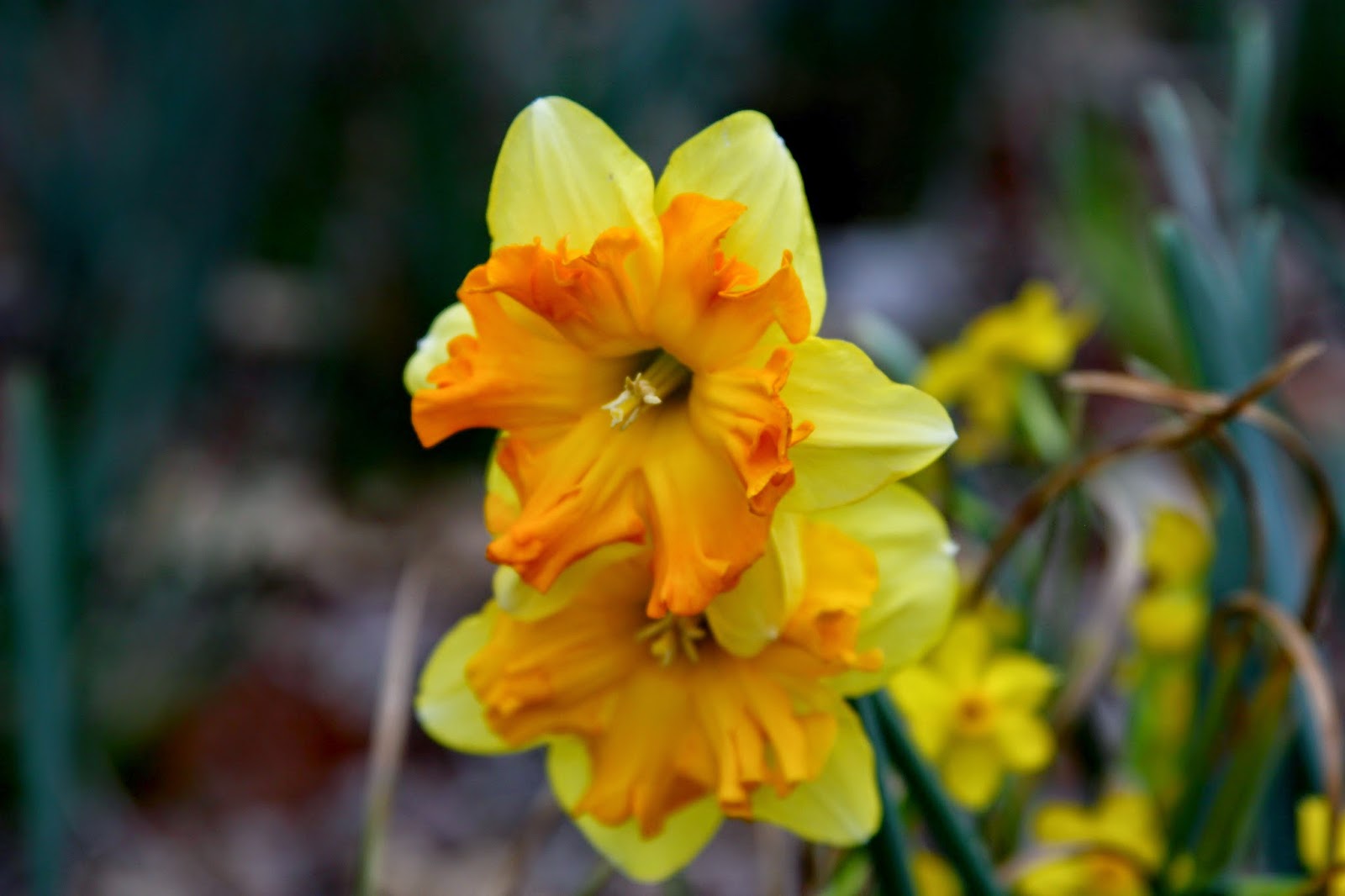
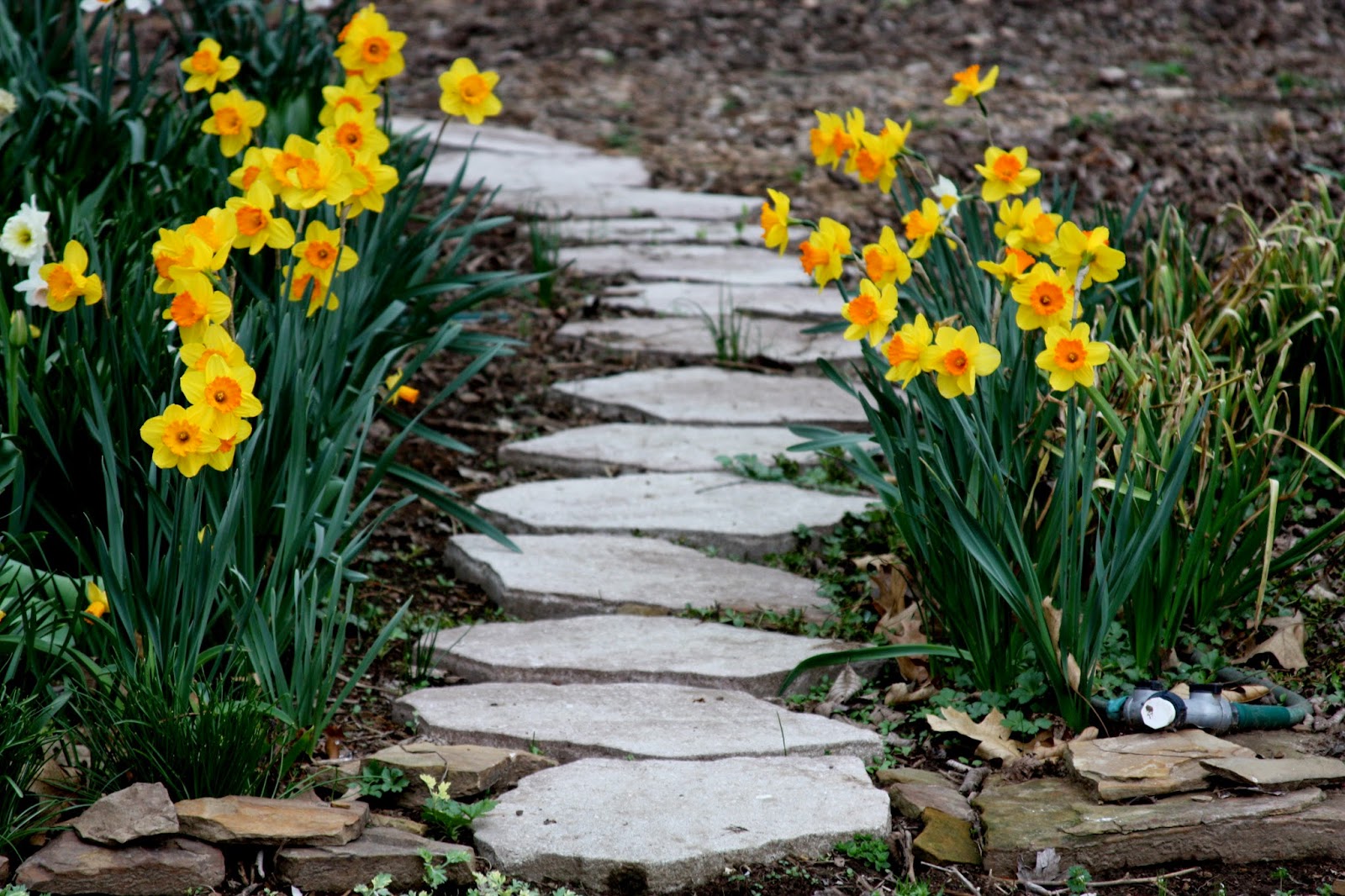
By CATHY SPAULDING/Phoenix Staff Writer Go beyond their “candlestick telephone” shape, and you might see that not all daffodils look alike.  “Some are four inches tall with tiny blooms. Some are 20 inches tall,” said Martha Stoodley of the Muskogee Garden Club. “The blooms come in white, yellow, orange, even pink.” Visitors can see such variety when at the annual Daffodil Day and Tea, 10 a.m. to 2 p.m. Saturday at the Thomas-Foreman Historic Home, 1419 W. Okmulgee Ave. More than 3,000 daffodils surround the home, built in 1898 for Indian Territory judge John R. Thomas.  “We have at least 15 varieties,” Stoodley said. “Two thousand bulbs were planted by the Garden Club three years ago. Last year, we added another 1,000, and in the winter we planted 600.” Daffodil Day began several years ago, when the Garden Club discovered Oklahoma was the only state in the region without a daffodil festival, Stoodley said. For $5, visitors to Saturday’s celebration can ...

Spring Flowers for Zone 7

Image
Come celebrate spring in Muskogee  Third Annual Daffodil Day, Saturday, 10 to 2 Three Rivers Museum and Thomas-Foreman Home 220 Elgin Daffodils in bloom, Daffodil-Themed art contest $10 both  museums, plant sale, art show and tea ----------------------------------------------------------------------------------------- The flowers of spring announce warmer temperatures and encourage us to get outside. The first show of daffodils, pansies, crocus and forsythia happening now will be followed by tulips, trilliums and azaleas. It is time to focus on spring gardening, visiting public displays and garden centers where we can enjoy the early blooms. Here are some flowers to look for: Pansies, Viola  x wittrockiana – Whether you planted them last winter or early spring, warmer temperatures confirm pansies as one of the most cheerful flowers for containers and beds. They can be planted in part shade or sun as long as the soil is well-drained. Grape H...

False Rue Anemone and Windlflower

Image
False Rue Anemone Isopyrum or Enemion biternatum These darling little flowers are slowly spreading in the shade bed. The first time I noticed them there were only three or four roots and one flower. Today, there are several dozen tiny plants of False Rue Anemone, Enemion biternatum. Every year when they come up I search for their name again since no matter what marker I put into that slope is washed away every winter by rain and melting snow. It is easy to research though. Google Images responds cooperatively every year to my search for "tiny, woodland flowers with red stems". False Rue Anemone leaf lobes False Rue Anemone is easily confused with Windflower, Thalictrum thalictroides. Well, it is for my eyes and lack of experience trekking the woods. Here is the clincher - the depth of the leaf lobes. Notice that they are deeply lobed. Then, click over to Native and Naturalized Plants  of the Carolinas and Georgia. You will see the difference immediately. Win...

Save the Bees Campaign

Image
Surely everyone knows by now that bees are in danger of disappointing people who eat by not being available to pollinate the plants that provide their food. Now, there's a campaign where those of us who are not in a position to actually raise bees can help out the situation. It's a fund raising site at https://www.indiegogo.com/projects/you-can-help-save-the-bees where you can contribute $10 or $10,000 to support the project. Or, you can hold an event in support of bees and bee-keepers in your community to raise awareness. Here's a simple factoid of interest: Honey bees make honey. Native bees make food. Click on over to The Xerces Society's page and learn more facts such as, " There is an astonishing diversity of native bees across the USA. About 4,000 species have been identified and catalogued, ranging in length from less than one eighth of an inch to more than one inch. They vary in color from dark brown or black to metallic green or blue, and may ha...