Posts

The Gardens at Crystal Bridges Museum

Image
The 120-acre site of Crystal Bridges Museum of American Art is a habitat for hundreds of thousands of native trees and plants. Named for the Crystal Spring that originates on the family home site, Alice Walton’s accomplishment in the Bentonville hills earned her a listing in Time Magazine’s 100 Most Influential People. Since 2008, Scott Eccleston, Director of Trails and Grounds, has worked with the Walton family, Tulsa landscape architects Howell & Vancuren, Frank Sharum Landscape Design of Ft. Smith, the board and the foundation to make a vision into reality. Eccleston said the passion of everyone involved is the reason it has all come together so spectacularly. Even though they started with beautiful Arkansas wooded hills, the site presented many challenges. For example, the design plan for the grounds included 270,000 native plants. “We put out feelers all over the country,” Eccleston said. “The result was that we could purchase only 5% of the plant material we needed.” ...

Invasive plants management database from Mark Renz

A new  invasive plant control database is online and ready for your use. It was developed by the Midwest Invasive Plant Network (MIPN) in cooperation with UW-Extension weed specialist Mark Renz’ lab in the Agronomy Department of the University of Wisconsin-Madison. It's a little slow to load after you click on the link (above) but it worked well for me and it has a cool factor. Click "Start Search". The next window is Select Plant. Here's the buggy part. If you choose "Free Form Search" nothing happens unless you type in a plant name. I put in Privet and was given the choice of 2-varieties to select. Or, choose Common Name List to see the 40-plants covered. "Information on non-chemical and chemical control methods is provided, including the appropriate timing of treatments and effectiveness of method. A key feature of the database is the ability to conduct a customizable search. Users can search information by applicator experience level, habit...

Coreopsis, Tickseed - Blooming now

Image
Butterflies enjoy the flowers and birds love the seeds. Coreopsis is easy to grow from seed and all manner of varieties are available as plants. They love heat and sun and succeed in dry locations. Perennial varieties are cold hardy to zone 5. Annual varieties re-seed and return but not enough to become pests - the birds eat too many of the seeds for that. Coreopsis comes in tall, short and groundcover. They all bloom profusely and make a sweet cut-flower bouquet. The bright yellow native one above is about 4-feet tall. Like pink flowers? Coreopsis American Dream is a thread leaf variety - pink flowers with yellow centers. The 1993 flower of the year in the Netherlands. Coreopsis Dream Catcher is another pink flowering variety. 14-18 inches tall and 18-inches tall Coreopsis Autumn Blush has dark centered peach colored flowers on 24 by 24 inch plants. Coreopsis lanceolata Baby Sun is only 16 by 16 at maturity - bright yellow flowers. Coreopsis Big Bang Cosmic Eye lives up to its name! C...

Agastache rupestris Apache Sunset and Sunset Hyssop

Image
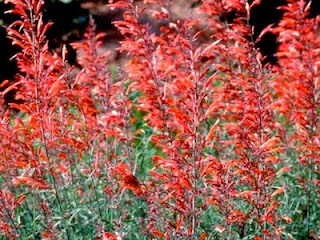
I saw Agastache Apache Sunset in bloom at a Colorado Springs Xeriscape demonstration garden. And, while it is a little more dusty-colored than the one in this promotional photo, it is eye-stoppingly beautiful when it blooms. Native to the US. Attracts bees and butterflies, deters deer because the entire plant smells like licorice. Silver leaves; no need to describe the fall-blooming flowers! Like all mints, the stems are square. Cold hardy as a perennial in zones 5 to 9 and drought tolerant even in full sun and mountain climates. Seeds available from Swallowtail Gardens Germination takes 2 or 3 weeks so start the seeds now, transplant them in another month, flowers will come late summer and until first hard frost. Space seedlings 18-inches apart. If your winter temperatures go lower than 20 below zero, be sure to mulch the plants' roots after the first freeze. Makes great cut flowers for inside the house, too.

Organic gardening in arid, mountainous regions

Image
The elevation of your growing zone impacts not only the length of your growing season but the amount of rainfall and oxygen your garden has to work with. A recent trip to an Arkansas garden proved the point. We are the same horticultural zone but they are 1300 ft elevation and we are 300 feet. They are in the hills and we are in the foothills. Their season begins later, their soil is different and their rainfall is greater. Colorado (and other) gardeners can be in one of a few cold hardiness zones and also have unique microclimates from each other due to creeks, mountains, soil type, etc. One thing all arid area gardeners have in common is lack of or very little rainfall. The publisher and editor of Colorado Gardener magazine , Jane Shellenberger, has a new book out to help Colorado gardeners succeed. Shellenberger points out that "permaculture, working with nature and using its patterns as models to design functional ecosystems, offers a solution for turning this situatio...

Lendonwood Gardens - Spectacular plants for zone 7

Image
Lendonwood Gardens  Oregon Grape, Mahonia aquifolium Berberidaceae Lendonwood Gardens Chinese Variegated Dogwood, Cornus Kousa 'Wolf Eyes' Lendonwood Gardens Bloodgood Japanese Maple, Acer palmatum var. atropurpureum 'Bloodgood' Lendonwood Gardens Flag Iris, Paleyellow iris, Iris pseudacorus Lendonwood Gardens Rhododendron

Lendonwood Gardens - Scenes and Garden Rooms

Image
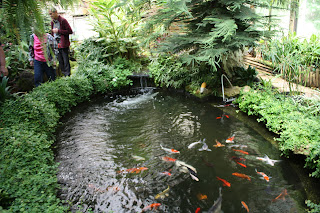
Lendonwood Gardens Inside the grow house Lendonwood Gardens Koi Pond and Tea House Lendonwood Gardens Japanese Garden Lendonwood Gardens Angel of Hope Lendonwood Gardens American Backyard Garden