Posts

Showing posts with the label attract butterflies to your garden

Tithonia Torch Flower Mexican Sunflower
Image
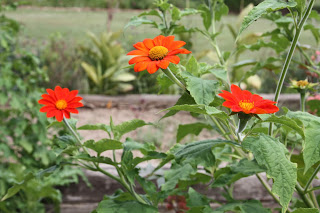
Husky and coarse with spectacularly gaudy flowers is how one garden reference describes Tithonia. Well, they are tall and open branched with stems as thick as a small tree, but oh, how the butterflies love those gaudy flowers. Every sunny hour of the day this month, assorted butterflies will be sitting on the flowers while swaying in the wind on Tithonia’s sturdy branches.  Tithonia rotundifolia has a few common names: Torch Flower , Golden Flower of the Incas and Mexican Sunflower but the seed packets say Tithonia.   Many of the nectar-providing flowers that are  blooming now are members of the Aster or Asteraceae plant family.  Tithonia is in the Sunflower tribe of the Aster family. Their native range goes from Central America, through Mexico and into the Southwestern US. There are several varieties but T. rotundifolia or Torch is the only one that shows up in the flower seed racks in the spring.  It grows 6-feet tall and 3 feet wide by the...

St. John's Wort with Ornamental Fruit

Image
Hypericum inodorum Hypearl Compact Red48" tall Plant Delights Nursery posted on their blog recently about a new St. John's Wort with Ornamental Fruit, Hypericum inodorum Hypearl Compact Red. It is really beautiful!  It's one of the hundreds of interesting selections in this year's catalog from plantsman Tony Avent and his crew at PD Nursery. Tony said the hardiness range is 6a to 9b so we are just barely safe to plant it but with winter protection ... .  Several years ago I received a garden writer sample plant of Hypericum Hypearls Renu from Blooms of Bressingham and it is thriving seven years later in part shade.  Just in case you were planning to go looking for Blooms of Bressingham they now call themselves Must Have Perennials  (wholesale) and  rozanne and friends (retail). Hypericum, St. John's Wort, in general, is considered a butterfly attracting plant and there are many varieties. Common St. John's Wort, Hypericum calycinum, has a...

Butterfly Gardening in the Shade

When we think of gardening for butterflies we think of native plants in sunny meadows but part shade works for butterfly gardening, too. So, don't despair if you'd like to see more butterflies in your yard and garden but have little full sun for the typical butterfly feeding plants, take heart. The Natural Web posted an article a few years ago that addresses shade butterfly gardening. The first point they make is that most butterflies need woody plants on which to raise their young and those plants create shade though reach for the sun. It's a lovely little pieceof writing and worth clicking over to read. Click on this link https://the-natural-web.org/2013/03/25/a-butterfly-garden-that-embraces-the-shade/

Encore Azaleas for Butterfly Gardening - my latest article

Image
I write a monthly column for Encore Azaleas. Here's my most recent one about how valuable  Encore Azaleas are for butterfly gardening. Attract Butterflies fall, spring and summer with Encore Azaleas http://www.encoreazalea.com/garden-ideas/article/attract-birds-bees-butterflies-with-encore-azaleas Autumn Twist Encore Azalea Tulsa Garden Center's fall blooming newsletter

Desert Bluebells - Phacelia campanularia

Image
My friend, Ronn Smith sent some seeds from his planting of Phacelia campanularia last summer. This winter I planted them in the garden shed. Today, here's how the seedlings looked - tiny! Smith lives in Phoenix and these beauties are drought tolerant and perennial in zones 7 through 10. It is a California desert native, can grow in  sunny, tight spaces, and enjoys taking the spotlight at the front border of a flower bed in the spring. When selecting the right place for them, remember that they thrive on the dry slopes in their native Southern CA. The entire plant is under a foot tall but has bright blue flowers with yellow stamens for a month. Photo: Ronn Smith They want gritty soil that drains well. Although they are annual plants they can reappear from seeds dropped after the first frost. They are part of the Boraginaceae family and if you love Borage but can't grow it, this is your plant. I love Borage but it is too hot and humid here in zone 7 NE OK. It b...

Columbine - Aquilegia - Perennial Seeds Winter Planting - You Can Grow That!

Image
December is a great time to finish planting the seeds, perennials and bulbs that will make spring glorious in our gardens!  You know that it's time to plant biennials, poppies, larkspur and other early spring flowers for the first bee and butterfly nectar in the neighborhood. But don't forget about the other shade garden favorites such as Columbine, also known as Granny's Bonnet. Columbine has a reputation for thriving in shade. In the early spring they enjoy the direct sun that falls on them under trees but they will not thrive in full-sun, hot, dry conditions. Plant them where you normally water or where you have added plenty of organic material such as leaves and mulch. A local gardening friend send me a baggie of seeds from her Columbine plants and it's time to get them going so the plants will be ready to plant  in early spring. Cold hardy in zones 4 to 8, perennial Aquilegias have a reputation for being easy to start from seed.  Seeds are ...

Pollinators love Joe Pye Weed - plant seeds this fall

Image
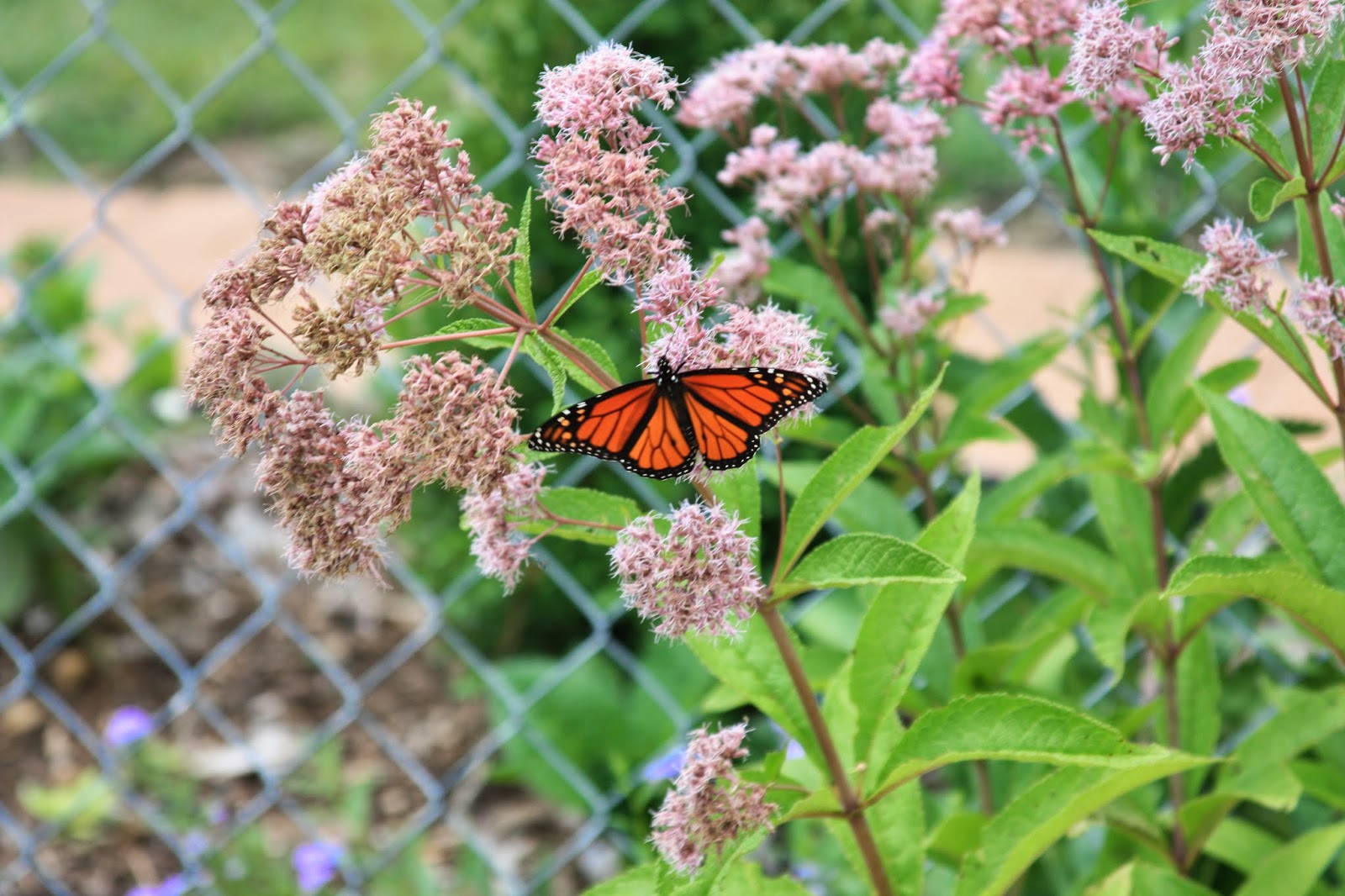
Joe Pye Weed with Monarch butterfly Joe Pye Weed is an all American native plant that is loved by every pollinator that visits our garden. The plants are rarely sold commercially but it is well worth purchasing and starting seeds if you like to watch butterflies, skippers and bees. The post I wrote about it last year is here . It's best to start seeds in the fall and there are a few Eupatorium varieties to choose from. Here's a bit more about that from a 2009 blog entry when I planted these original plants from seed that are still providing nectar today. Anyone who wants what is called a butterfly garden should have some Joe Pye but it is a weed, er um wildflower, in enough places that gardeners shun it. Also, it's big, tall and a bit coarse compared to lilies and roses.

New Geranium Azure Rush from Blooms of Bressingham

Image
As terrific as Rozanne, Azure Rush is said to be heat-loving and long-flowering perennial for half shade. Blooms of Bressingham says, "The blooms are a lighter blue and habit is more mounding than 'Rozanne's'. Grows to 24 inches tall by 28 inches wide in sun to part shade. USDA Hardiness Zones 5-8."  Blooms of Bressingham You may recall that Geranium ‘Rozanne,’ was the 2008 Perennial Plant Association ( www.perennialplant.org/) Plant of the Year. The Missouri Botanical Garden grows Geranium Gerwat Rozanne, or Cranesbill, in several of their gardens. it blooms for them in St. Louis from May through July.  ‘Azure Rush’ is lighter blue than ‘Rozanne,’ and it ambles meaning it is more compact with shorter internodes, so you'll have low-growing, mounded plants - 18-inches tall and 24-inches wide per plant. Best with average, medium-moist, well-drained organic soil with afternoon shade. Best grown in full sun with some afternoon protection. Organic so...

Bring Butterflies, Skippers and Moths to Your Garden

Image
Many people love the sight of butterflies, moths and skippers in their garden. Planning ahead can help bring more this summer. Carole Sevilla Brown recently posted a list of five actions to take to improve your butterfly gardening and it's an important place to start. Brown's blog entry is at http://www.beautifulwildlifegarden.com/5-steps-to-butterfly-garden.html Maybe you have some ideas that work for you. We'd love to hear those since we always want more! Start Here Find out what kind of butterflies, moths and skippers are common or native to your neck of the woods so you can plant what they raise their babies (caterpillars or larvae) on. When these insects are born in your garden they tend to stick around and make a few new generations as long as the food lasts.  Butterfly weed - Asclepias tuberosa Mass planting instead of spot planting is a great suggestion from Brown's blog. A single zinnia here and there will bring a single adult butterfl...